 Sign in with Google

What is Pharmacovigilance? Complete Beginner Guide (2026)
Introduction: Why Pharmacovigilance Matters More Than Ever in 2026
In today’s rapidly evolving pharmaceutical landscape, patient safety is no longer optional—it is the foundation of every successful drug lifecycle. From clinical trials to post-marketing surveillance, ensuring that medicines remain safe is a global priority.
This is where pharmacovigilance steps in.
If you are a pharmacy, life sciences, or medical graduate wondering how to enter a stable, high-growth career, pharmacovigilance training is your gateway. And platforms like ThePharmaDaily are actively shaping the next generation of drug safety professionals.
What is Pharmacovigilance? (Simple Definition)
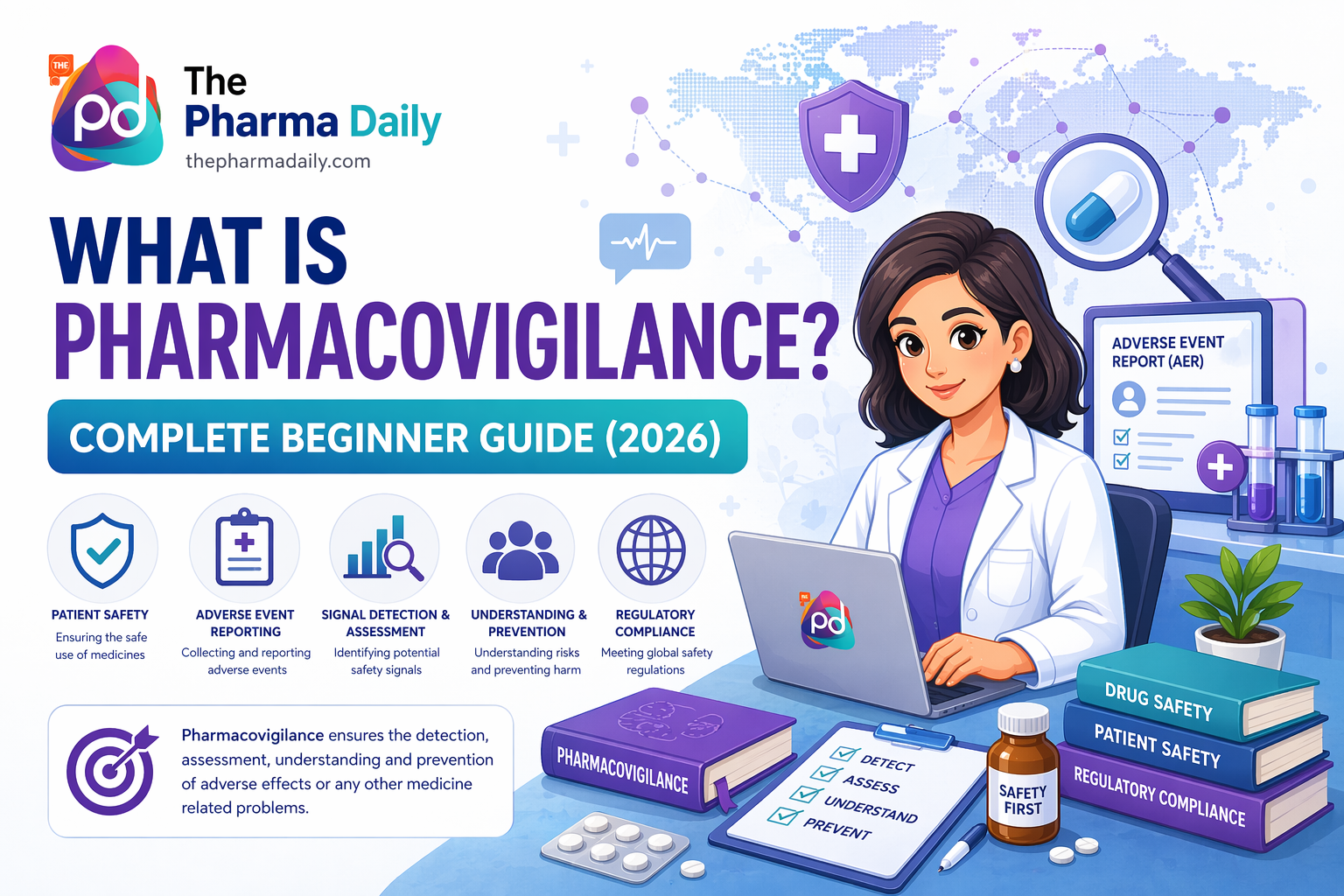
Pharmacovigilance is the science and activities related to:
- Detecting
- Assessing
- Understanding
- Preventing adverse effects or any other drug-related problems
In simple terms, pharmacovigilance ensures that medicines are safe for human use.
It focuses on identifying Adverse Drug Reactions (ADRs) and minimizing risks associated with pharmaceutical products.
Why Pharmacovigilance Is Important?
Imagine a drug that performs perfectly during clinical trials but shows rare side effects when used by millions globally. Without pharmacovigilance, these risks would go unnoticed.
Key Importance:
- Protects patient safety
- Supports regulatory compliance
- Builds trust in pharmaceutical companies
- Ensures benefit-risk balance of medicines
- Helps in signal detection and risk management
This is why global regulatory authorities like US FDA, EMA, and CDSCO heavily rely on pharmacovigilance systems.
Scope of Pharmacovigilance in 2026
The demand for pharmacovigilance professionals has skyrocketed due to:
- Increasing drug approvals
- Growing clinical trials
- Expansion of global safety databases
- AI-driven drug safety monitoring
Career Scope Includes:
- Case Processing (ICSR Handling)
- Medical Review
- Signal Detection
- Aggregate Reporting (PSUR, PBRER)
- Risk Management Plans (RMP)
- Literature Screening
With the right pharmacovigilance training, you can enter multinational companies like TCS, Cognizant, Accenture, IQVIA, and Fortrea.
Who Can Start a Career in Pharmacovigilance?
One of the biggest advantages of pharmacovigilance is its accessibility.
Eligible Backgrounds:
- B.Pharm / M.Pharm
- Pharm.D
- MBBS / BDS / BHMS / BAMS
- Life Sciences Graduates
Even freshers can enter the field with structured pharmacovigilance training.
Key Skills Required in Pharmacovigilance
To succeed in pharmacovigilance, you need a mix of scientific understanding and analytical thinking.
Must-Have Skills:
- Medical terminology knowledge
- Attention to detail
- Data interpretation
- Regulatory understanding
- Case narrative writing
- Communication skills
The good news? These skills can be systematically developed through pharmacovigilance training programs at ThePharmaDaily.
Pharmacovigilance Process Explained (Step-by-Step)
Understanding the workflow is crucial for beginners.
1. Case Collection
Adverse event data is collected from various sources like healthcare professionals, patients, and literature.
2. Case Processing (ICSR)
Individual Case Safety Reports are validated and entered into safety databases.
3. Medical Review
Medical experts assess causality and seriousness.
4. Signal Detection
Patterns are analyzed to identify potential safety signals.
5. Reporting
Reports are submitted to regulatory authorities within strict timelines.
This entire workflow is covered practically in ThePharmaDaily pharmacovigilance training program, making you job-ready from Day 1.
Career Opportunities & Salary in Pharmacovigilance (India & Global)
Entry-Level Roles:
- Drug Safety Associate
- Pharmacovigilance Associate
- Case Processor
Salary Range (India):
- Freshers: ₹3.5–5.5 LPA
- 2–5 years: ₹7–11 LPA
- Experienced professionals: ₹17+ LPA
With proper pharmacovigilance training, candidates often secure placements faster and with better packages.
Why Pharmacovigilance Is a Future-Proof Career?
Let’s be honest—many pharma careers are saturated. Pharmacovigilance isn’t.
Reasons It’s Future-Proof:
- Regulatory-driven demand (non-negotiable industry function)
- Global outsourcing growth (India = PV hub)
- AI integration (but human expertise still critical)
- Continuous drug development
In short: No drugs = no pharma industry. No safety = no drugs. No pharmacovigilance = no safety.
How to Start Your Pharmacovigilance Career (Step-by-Step Guide)?
If you’re serious about entering this field, here’s a proven roadmap:
Step 1: Learn Fundamentals
Understand ADRs, ICSR, and drug safety basics.
Step 2: Enroll in Structured Training
Join a practical, industry-focused program.
👉 Start here: https://thepharmadaily.com/pharmacovigilance-training
Step 3: Practice Case Studies
Work on real-world scenarios and narratives.
Step 4: Build ATS-Friendly Resume
Highlight PV skills and training experience.
Step 5: Apply & Crack Interviews
Prepare with mock interviews and real recruiter questions.
Why Choose ThePharmaDaily for Pharmacovigilance Training?
Not all training programs are created equal.
What Makes ThePharmaDaily Stand Out:
- Industry-expert mentorship
- Real-time case studies
- Interview-focused preparation
- Placement assistance
- Beginner-to-advanced structured curriculum
Thousands of students have already started their careers through ThePharmaDaily pharmacovigilance training.
👉 Explore program details: https://thepharmadaily.com/pharmacovigilance-training
Final Thoughts
Pharmacovigilance is not just a career—it’s a responsibility toward global patient safety.
If you’re looking for a field that offers:
- Stability
- Growth
- Global exposure
- Meaningful impact
Then pharmacovigilance is your calling.
And the best way to start?
A strong foundation through pharmacovigilance training at ThePharmaDaily.
Ready to Start Your Pharmacovigilance Journey?
Don’t wait for opportunities—prepare for them.
👉 Join now: https://thepharmadaily.com/pharmacovigilance-training
Your career in drug safety starts today.