 Sign in with Google
How to Get a Work From Home Pharmacovigilance Job in India in 2027?
Are you a B.Pharm, M.Pharm, Pharm.D, MBBS, BDS, Nursing or Life Sciences graduate looking for a work-from-home pharmacovigilance job in India in 2027? Do you want to build a career in the pharmaceutical industry without relocating to major cities such as Hyderabad, Bengaluru, Pune, Mumbai or Gurugram?
Pharmacovigilance (PV), also known as drug safety, is an exciting career opportunity for healthcare and life sciences graduates who want to work in pharmaceutical companies, Contract Research Organizations (CROs), biotechnology companies and global healthcare organizations.
With increasing emphasis on patient safety, regulatory compliance and post-marketing surveillance, pharmacovigilance professionals play an important role in monitoring the safety of medicines throughout their lifecycle.
The good news is that work-from-home and remote pharmacovigilance opportunities exist in India. However, getting one requires more than an academic degree or a pharmacovigilance certificate. Employers look for candidates who understand real-world drug safety operations, can process Individual Case Safety Reports (ICSRs), have practical exposure to pharmacovigilance software and demonstrate strong technical knowledge during interviews.
So, how can a fresher or experienced professional get a work-from-home pharmacovigilance job in India in 2027?
In this comprehensive guide, we will discuss everything you need to know, including eligibility, technical skills, pharmacovigilance software, job opportunities, salary expectations, interview preparation and the importance of hands-on training.
We will also explain how ThePharmaDaily, powered by VigiSolvo Pvt. Ltd., can help you develop industry-oriented skills and prepare for pharmacovigilance career opportunities.
Quick Answer: How to Get a Work From Home Pharmacovigilance Job in India in 2027?
To get a work-from-home pharmacovigilance job in India in 2027, you should:
-
Complete a relevant educational qualification such as B.Pharm, M.Pharm, Pharm.D, B.Sc., M.Sc., Nursing or another eligible healthcare or life sciences degree.
-
Learn pharmacovigilance fundamentals, clinical research and drug safety regulations.
-
Develop practical knowledge of ICSR case processing, MedDRA coding, WHO Drug Dictionary coding, narrative writing and causality assessment.
-
Gain hands-on exposure to pharmacovigilance databases and tools such as Argus Safety, ARISg, VigiFlow and relevant medical and drug dictionaries.
-
Understand clinical trial safety, SUSAR reporting and post-marketing surveillance.
-
Prepare an ATS-friendly resume and optimize your LinkedIn profile.
-
Practise technical interviews, HR interviews and real-world pharmacovigilance case studies.
-
Apply consistently through company career portals, LinkedIn, Naukri and verified job platforms.
The most important factor is practical job readiness. Employers want candidates who can understand and perform drug safety activities rather than simply memorize theoretical definitions.
1. What Is Pharmacovigilance and Why Is It a Good Career Option in 2027?
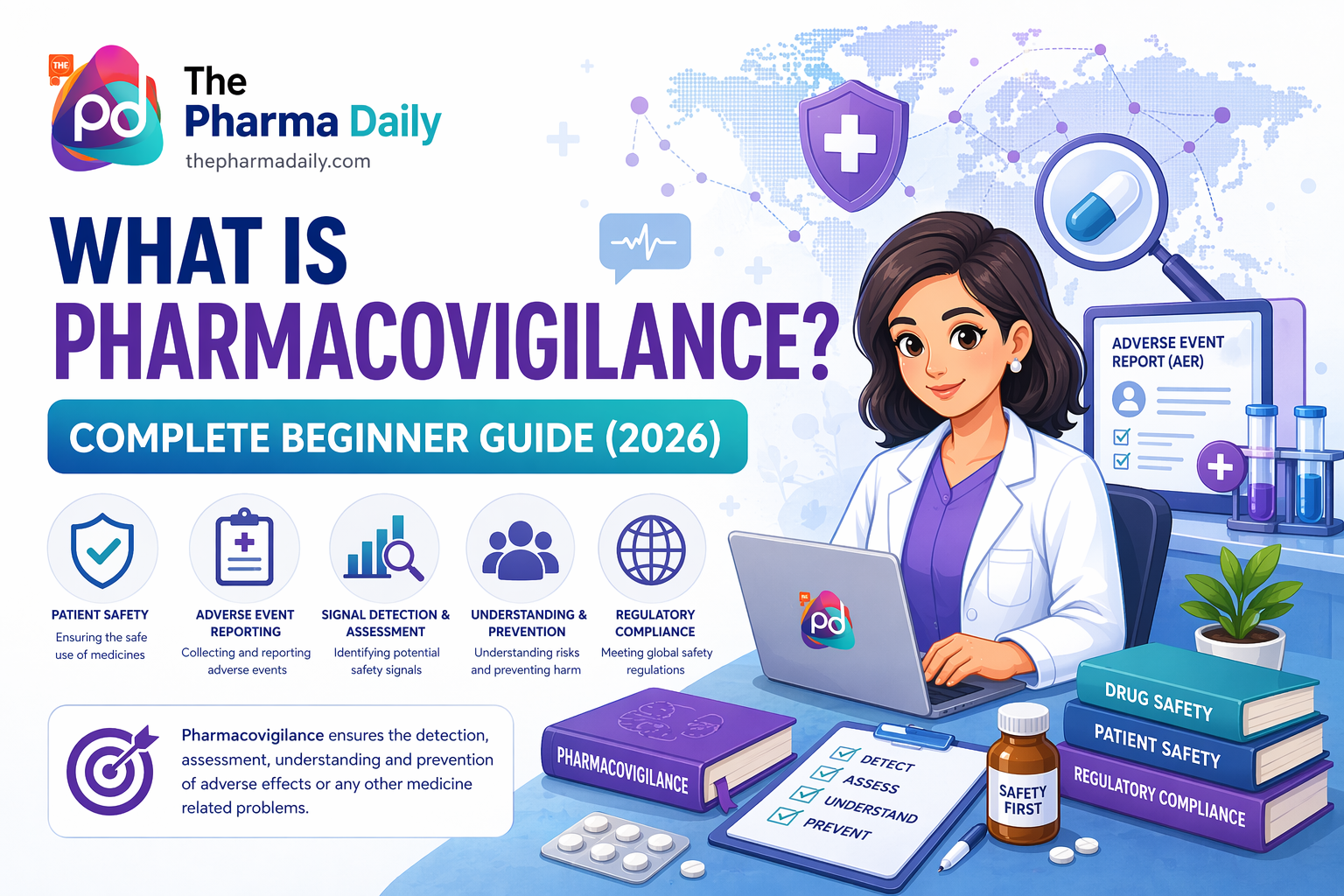
Pharmacovigilance is the science and activities relating to the detection, assessment, understanding and prevention of adverse effects or any other medicine-related problems.
In simple words, pharmacovigilance ensures that medicines remain safe for patients even after they enter clinical trials or become available in the market.
Whenever a patient experiences an adverse event after taking a medication, the information may need to be collected, documented, assessed and reported through an appropriate drug safety process.
Pharmacovigilance professionals help pharmaceutical companies and healthcare organizations identify potential safety concerns and maintain compliance with regulatory requirements.
Major Areas of Pharmacovigilance
1. Individual Case Safety Report (ICSR) Processing
ICSR processing involves collecting, reviewing, entering, coding and evaluating adverse event information received from healthcare professionals, patients, clinical investigators and other sources.
2. Clinical Trial Pharmacovigilance
Clinical trial safety professionals monitor adverse events during clinical research, including:
-
Adverse Events (AEs)
-
Serious Adverse Events (SAEs)
-
Suspected Unexpected Serious Adverse Reactions (SUSARs)
-
Expedited safety reporting
-
Clinical trial safety reconciliation
3. Post-Marketing Surveillance
Post-marketing pharmacovigilance involves monitoring the safety of medicines after regulatory approval and commercialization.
4. Aggregate Safety Reporting
This area includes preparing and reviewing periodic safety reports such as:
-
Periodic Safety Update Reports (PSURs)
-
Periodic Benefit-Risk Evaluation Reports (PBRERs)
-
Development Safety Update Reports (DSURs)
5. Signal Detection and Risk Management
Professionals analyze safety data to identify potential new risks, evaluate safety signals and support benefit-risk assessments.
6. Pharmacovigilance Quality and Compliance
This includes Standard Operating Procedures (SOPs), quality control, audits, inspections, regulatory compliance and Pharmacovigilance System Master Files (PSMFs).
The Pharmacovigilance Programme of India (PvPI), coordinated by the Indian Pharmacopoeia Commission (IPC), supports the national system for monitoring adverse drug reactions and improving patient safety.
India's pharmacovigilance ecosystem also involves pharmaceutical companies, marketing authorization holders, CROs, hospitals, healthcare professionals and regulatory authorities.
2. Can Freshers Get Work From Home Pharmacovigilance Jobs in India?
Yes! Freshers can apply for pharmacovigilance opportunities that offer remote or hybrid working arrangements. However, fully remote opportunities for freshers can be more competitive than opportunities requiring prior industry experience.
Many organizations prefer candidates who already understand safety databases, ICSR workflows and medical coding.
Freshers should therefore focus on developing practical skills before applying.
Entry-Level Pharmacovigilance Jobs for Freshers
| Job Profile | Typical Responsibilities |
|---|---|
| Drug Safety Associate | Adverse event data processing and safety documentation |
| Pharmacovigilance Associate | ICSR processing, coding and case management |
| Safety Data Associate | Safety data entry, review and quality checks |
| ICSR Case Processor | Initial and follow-up case processing |
| Medical Information Associate | Handling medical information requests |
| Clinical Safety Associate | Clinical trial safety documentation |
| Pharmacovigilance Trainee | Supporting drug safety operations |
Not every position offers work-from-home arrangements. Some companies may require office-based training before permitting remote work.
My Recommendation: If you are a fresher, do not restrict your applications exclusively to work-from-home jobs. Apply for suitable remote, hybrid and office-based entry-level opportunities. Your first industry experience can significantly strengthen your chances of securing a remote position later.
3. Eligibility Criteria for Pharmacovigilance Jobs in India
Pharmacovigilance is suitable for graduates from several healthcare and life sciences backgrounds.
Commonly Accepted Educational Qualifications
| Educational Qualification | Potential Career Opportunities |
|---|---|
| B.Pharm | Drug Safety Associate, PV Associate |
| M.Pharm | PV Associate, Safety Specialist |
| Pharm.D | Drug Safety, Clinical Safety, Medical Review |
| MBBS | Medical Review and Safety Physician pathways, subject to qualifications |
| BDS / MDS | Selected drug safety and medical review roles |
| B.Sc. Life Sciences | PV Trainee, Safety Data Associate |
| M.Sc. Life Sciences | Pharmacovigilance Associate |
| B.Sc. / M.Sc. Nursing | Clinical Safety and Drug Safety |
| BAMS / BHMS / BUMS | Selected PV opportunities, subject to employer criteria |
| BPT / MPT | Selected healthcare and life sciences safety roles |
Important: Eligibility varies between employers. Some organizations accept B.Sc. and M.Sc. graduates, while others specifically require pharmacy, medicine or nursing qualifications.
Always check the educational requirements mentioned in the individual job description.
4. Essential Pharmacovigilance Skills Employers Look for in 2027
A pharmacovigilance certificate alone is not enough to make you job-ready.
To become a competitive candidate for remote drug safety jobs, you should understand the complete ICSR workflow and be comfortable performing practical activities.
Here are the major technical skills you should develop.
A. ICSR Case Processing
ICSR case processing is one of the most important entry-level skills in pharmacovigilance.
You should understand:
-
Identification of adverse event information.
-
Four minimum criteria of a valid ICSR.
-
Seriousness assessment.
-
Expectedness assessment.
-
Causality assessment.
-
Initial and follow-up cases.
-
Duplicate case identification.
-
Case validity and invalid cases.
-
Data entry and medical review.
-
Narrative writing.
-
Case quality control.
-
Regulatory reporting timelines.
You should also understand the difference between:
-
Adverse Event (AE)
-
Adverse Drug Reaction (ADR)
-
Serious Adverse Event (SAE)
-
Serious Adverse Drug Reaction (SADR)
-
Unexpected Adverse Drug Reaction
-
SUSAR
Employers frequently evaluate these concepts during technical interviews.
B. MedDRA Coding
The Medical Dictionary for Regulatory Activities (MedDRA) is an internationally standardized medical terminology used for coding medical information in regulatory activities.
A pharmacovigilance professional must understand how to code:
-
Adverse events
-
Signs and symptoms
-
Diagnoses
-
Medical conditions
-
Relevant medical history
-
Indications
You should understand the five-level MedDRA hierarchy:
-
System Organ Class (SOC)
-
High Level Group Term (HLGT)
-
High Level Term (HLT)
-
Preferred Term (PT)
-
Lowest Level Term (LLT)
Practical exposure to the MedDRA browser or dictionary is valuable because interviewers may give you medical scenarios and ask you to identify the appropriate coding terminology.
C. WHO Drug Dictionary Coding
Drug identification is another essential pharmacovigilance skill.
You should learn how to identify and classify:
-
Suspect drugs
-
Concomitant drugs
-
Interacting drugs
-
Past drugs
-
Drug indications
-
Routes of administration
-
Dosage information
-
Drug formulations
You should also understand the importance of systematic drug coding and the WHO Drug Dictionary.
D. Narrative Writing
A pharmacovigilance case narrative is a structured summary of the patient's relevant medical history, suspect medication, adverse event, treatment, clinical course and outcome.
A good narrative must be:
-
Medically accurate.
-
Chronologically organized.
-
Clear and concise.
-
Free from unsupported assumptions.
-
Consistent with the source documents.
Candidates should practise writing narratives using sample case studies.
E. Causality and Seriousness Assessment
You must understand how to assess the relationship between a suspected drug and an adverse event.
Important concepts include:
-
WHO-UMC causality assessment.
-
Naranjo Algorithm.
-
Seriousness criteria.
-
Expectedness.
-
Dechallenge.
-
Rechallenge.
-
Confounding factors.
These concepts help you understand how safety information is evaluated and documented.
5. Pharmacovigilance Software and Tools You Must Learn to Get a Remote Job
This is where many aspiring pharmacovigilance professionals make a mistake.
They complete a theoretical course, learn definitions and terminology, and start applying for jobs without understanding how actual drug safety work is performed.
However, pharmacovigilance is a technology-driven profession.
Professionals use dedicated safety databases, medical dictionaries, drug dictionaries, reporting systems and regulatory platforms to perform their daily responsibilities.
If your goal is to get a work-from-home pharmacovigilance job in 2027, practical exposure to relevant software and tools should be a major part of your preparation.
Here are the important tools you should understand.
1. Argus Safety
Oracle Argus Safety is a widely used pharmacovigilance safety database.
It supports drug safety case management and related safety operations.
You should understand:
-
Safety case creation.
-
Case data entry.
-
Patient and reporter information.
-
Drug information.
-
Event information.
-
Medical coding.
-
Case assessment.
-
Workflow management.
-
Case review and quality control.
2. ARISg
ARISg is a pharmacovigilance safety database used for managing drug safety information.
Practical familiarity with its workflows can help candidates understand how safety case information is managed within an enterprise environment.
3. VigiFlow
VigiFlow is a web-based individual case safety report management system used within pharmacovigilance programmes.
It is particularly relevant to understanding the reporting ecosystem associated with national pharmacovigilance programmes.
4. MedDRA Browser
The MedDRA browser helps professionals search and identify standardized medical terminology for coding adverse events and other medical information.
5. WHO Drug Dictionary
WHO Drug Dictionary supports standardized identification and classification of medicinal products.
Understanding its search functionality and drug coding structure is an important skill for ICSR case processing.
6. DrugBank
DrugBank is a useful drug information resource that provides information about medicines, their pharmacological properties, targets, interactions and other drug-related details.
It helps candidates strengthen their understanding of drug information and medical terminology.
7. ClinicalTrials.gov
ClinicalTrials.gov is an important resource for understanding registered clinical studies.
Pharmacovigilance professionals working in clinical research may use clinical trial information to understand study details and relevant safety contexts.
8. FAERS and Public Drug Safety Databases
The FDA Adverse Event Reporting System (FAERS) is an important public resource for understanding post-marketing adverse event data.
Candidates should understand how publicly available safety information is collected, accessed and interpreted.
9. Microsoft Excel and Power BI
Excel is useful for data handling, reconciliation, tracking and reporting.
Power BI can support data visualization and operational reporting.
You should develop practical skills in:
-
Sorting and filtering.
-
VLOOKUP and XLOOKUP.
-
Pivot tables.
-
Data cleaning.
-
Conditional formatting.
-
Basic dashboards.
-
Data interpretation.
10. Generative AI Tools
Artificial intelligence is increasingly relevant to healthcare and life sciences operations.
You should understand how to use tools such as ChatGPT and Gemini responsibly for:
-
Learning medical terminology.
-
Understanding regulatory concepts.
-
Practising interview questions.
-
Improving professional communication.
-
Analysing fictional case studies.
-
Supporting structured learning.
Never enter confidential patient information, protected health information or proprietary company safety data into public AI tools.
Remember: Knowing the name of a software platform is not the same as knowing how to use it. Practical training should involve actual exercises in an authorized training or demonstration environment. Access to production databases is controlled by employers.
6. Important Pharmacovigilance Guidelines and Regulations to Prepare for 2027
If you want to work with global pharmaceutical companies or CROs, you should develop a strong understanding of international and Indian pharmacovigilance requirements.
Important Guidelines and Regulations
| Guideline / Regulation | Importance |
|---|---|
| ICH E2A | Clinical safety data management and expedited reporting |
| ICH E2B(R3) | Electronic transmission of ICSRs |
| ICH E2C(R2) | Periodic Benefit-Risk Evaluation Reports |
| ICH E2D | Post-approval safety data management and reporting |
| ICH E2F | Development Safety Update Reports |
| ICH E6(R3) | Good Clinical Practice |
| ICH E8(R1) | General considerations for clinical studies |
| EU GVP Modules | European pharmacovigilance requirements |
| US FDA Safety Reporting Requirements | Drug safety reporting in the United States |
| Indian PvPI Guidelines | Pharmacovigilance framework in India |
You should also understand the roles of:
-
CDSCO – Central Drugs Standard Control Organisation.
-
IPC – Indian Pharmacopoeia Commission.
-
PvPI – Pharmacovigilance Programme of India.
-
EMA – European Medicines Agency.
-
US FDA – Food and Drug Administration.
-
WHO – World Health Organization.
For candidates interested in global pharmacovigilance, understanding regulatory differences between the US, European Union and Indian markets is an advantage.
7. What Is the Salary of a Work From Home Pharmacovigilance Professional in India in 2027?
Pharmacovigilance salaries depend on educational qualifications, experience, technical skills, employer, job responsibilities and location.
Remote working arrangements do not automatically mean higher or lower salaries. Compensation is generally determined by the role and employer's pay structure.
The following figures are illustrative career-planning estimates, not verified 2027 salary benchmarks or guaranteed offers.
Indicative Pharmacovigilance Salary in India
| Experience | Indicative Annual Salary |
|---|---|
| Fresher / Trainee | ₹2.5–4 LPA |
| 1–2 Years | ₹3–5 LPA |
| 2–4 Years | ₹4–7 LPA |
| 4–6 Years | ₹6–10 LPA |
| 6–8 Years | ₹8–13 LPA |
| 8+ Years | ₹10–18+ LPA |
Specialized roles in signal detection, aggregate reporting, medical review, regulatory affairs and safety systems may offer different compensation depending on the required expertise.
How Can You Increase Your Salary in Pharmacovigilance?
Focus on developing multiple competencies rather than limiting yourself to basic case processing.
For example:
-
Gain end-to-end ICSR processing experience.
-
Develop expertise in clinical trial safety.
-
Learn aggregate safety reporting.
-
Understand signal detection.
-
Develop medical writing skills.
-
Learn safety database workflows.
-
Improve Excel and Power BI skills.
-
Develop strong regulatory knowledge.
-
Improve professional communication and stakeholder management.
The combination of domain expertise and technical competency can help you pursue more advanced career opportunities.
8. Which Companies Offer Work From Home Pharmacovigilance Jobs in India?
Several multinational pharmaceutical companies, CROs and life sciences service providers recruit professionals for pharmacovigilance and drug safety operations.
Some organizations worth monitoring include:
-
IQVIA
-
ICON
-
Parexel
-
Syneos Health
-
Accenture
-
Cognizant
-
Thermo Fisher Scientific
-
Labcorp
-
ProPharma
-
ProductLife Group
-
Freyr Solutions
-
Wipro
-
Tata Consultancy Services (TCS)
-
Fortrea
These companies may offer office-based, hybrid or remote opportunities depending on the position, business requirements and location.
Do not assume that every company offers work-from-home opportunities for every pharmacovigilance position.
Where Can You Find Remote Pharmacovigilance Jobs?
Use the following resources:
-
LinkedIn Jobs.
-
Naukri.com.
-
Indeed India.
-
Company career portals.
-
CRO recruitment websites.
-
ThePharmaDaily Global Job Portal.
Useful Job Search Keywords
-
Pharmacovigilance Work From Home Jobs.
-
Remote Drug Safety Associate Jobs.
-
ICSR Case Processor Remote India.
-
Pharmacovigilance Associate Fresher.
-
Drug Safety Specialist Remote.
-
Clinical Safety Associate India.
-
Medical Reviewer Remote.
-
Safety Data Associate Work From Home.
Pro Tip: Search for both the job title and the working arrangement. Some companies advertise remote jobs using terms such as Remote India, Home-Based, Work From Home, Distributed Team or Office/Home.
9. How to Prepare Your Resume for Remote Pharmacovigilance Jobs
Your resume is often the first opportunity to demonstrate your suitability for a pharmacovigilance role.
A generic resume mentioning only your degree and pharmacovigilance certification will not effectively communicate your technical capabilities.
Your resume should highlight practical skills and relevant training.
Important Skills to Mention
-
Pharmacovigilance Fundamentals.
-
ICSR Case Processing.
-
Seriousness Assessment.
-
Causality Assessment.
-
MedDRA Coding.
-
WHO Drug Dictionary Coding.
-
Narrative Writing.
-
SUSAR Reporting.
-
Clinical Trial Safety.
-
Post-Marketing Surveillance.
-
Argus Safety.
-
ARISg.
-
VigiFlow.
-
Drug Information Research.
-
ICH Guidelines.
-
GVP Guidelines.
-
Microsoft Excel.
-
Medical Terminology.
Only mention software and competencies that you have genuinely studied or practised. Clearly distinguish between training exposure and professional work experience.
Example of a Professional Resume Headline
Pharmacovigilance Trainee | ICSR Case Processing | MedDRA & WHO-DD Coding | Drug Safety | Clinical Research | Argus & ARISg Training Exposure
For experienced professionals, highlight actual case volumes, case types, quality metrics, safety databases and responsibilities where disclosure is permitted.
Optimize Your LinkedIn Profile
Recruiters frequently use LinkedIn to identify candidates for drug safety positions.
Your LinkedIn profile should contain:
-
A professional photograph.
-
A clear pharmacovigilance-focused headline.
-
A detailed About section.
-
Relevant technical skills.
-
Training and certification details.
-
Practical projects and assignments.
-
Professional recommendations.
-
An updated resume.
Connect with pharmacovigilance recruiters, drug safety professionals, CRO employees and talent acquisition specialists.
10. How to Crack a Pharmacovigilance Interview for a Work From Home Job
Technical knowledge and communication skills both matter during pharmacovigilance interviews.
Candidates applying for remote positions may also be assessed on their ability to work independently, manage deadlines, communicate professionally and maintain data confidentiality.
Frequently Asked Pharmacovigilance Interview Questions
Q1. What is pharmacovigilance?
Pharmacovigilance is the science and activities relating to the detection, assessment, understanding and prevention of adverse effects or any other medicine-related problems.
Q2. What are the four minimum criteria of a valid ICSR?
-
An identifiable patient.
-
An identifiable reporter.
-
A suspect medicinal product.
-
An adverse event or reaction.
Q3. What is the difference between an AE and an ADR?
An adverse event is an untoward medical occurrence following the use of a medicinal product, without necessarily having a causal relationship with that product.
An adverse drug reaction is a harmful and unintended response for which a causal relationship with the medicinal product is at least a reasonable possibility, according to the applicable definition and context.
Q4. What is a SUSAR?
A Suspected Unexpected Serious Adverse Reaction is a serious adverse reaction that is suspected to be related to an investigational medicinal product and is unexpected based on the applicable reference safety information.
Q5. What is MedDRA?
MedDRA is the Medical Dictionary for Regulatory Activities, an internationally standardized medical terminology used for coding medical information in regulatory activities.
Q6. What is the difference between a suspect drug and a concomitant drug?
A suspect drug is a medicinal product suspected of causing or contributing to an adverse event.
A concomitant drug is another medicinal product used by the patient during the relevant period, which is not necessarily suspected of causing the event.
Q7. What is a follow-up case?
A follow-up case contains additional information received after an initial safety report has been submitted or documented.
Q8. What is causality assessment?
Causality assessment is the evaluation of the possible relationship between a medicinal product and an adverse event.
Q9. What is the difference between seriousness and severity?
Seriousness is a regulatory classification based on defined criteria such as death, life-threatening events, hospitalization, disability, congenital anomaly or other medically important conditions.
Severity describes the intensity of an event, such as mild, moderate or severe.
Q10. Why should we hire you for a remote pharmacovigilance position?
A strong answer should demonstrate:
-
Your understanding of pharmacovigilance.
-
Your practical exposure to relevant tools.
-
Your ability to process safety information accurately.
-
Your communication skills.
-
Your ability to manage deadlines independently.
-
Your commitment to data confidentiality and quality.
Do not simply memorize answers. Practise explaining concepts with relevant examples.
11. How Long Does It Take to Become Job-Ready for Pharmacovigilance?
The learning duration depends on your educational background, prior knowledge, practical exposure and consistency.
A structured learning programme can help you develop the necessary foundation and technical skills.
For a beginner, a 12-week learning plan can be organized as follows:
12-Week Pharmacovigilance Learning Roadmap
| Week | Learning Focus |
|---|---|
| 1 | Pharmacy Fundamentals and Medical Terminology |
| 2 | Introduction to Clinical Research |
| 3 | Clinical Trial Operations and GCP |
| 4 | Clinical Data Management Fundamentals |
| 5 | Introduction to Pharmacovigilance |
| 6 | ICSR Case Processing |
| 7 | MedDRA and WHO Drug Dictionary |
| 8 | Pharmacovigilance Software Training |
| 9 | Clinical Trial Safety and SUSAR Reporting |
| 10 | Regulatory Affairs and Medical Writing |
| 11 | Advanced Excel, Power BI and Generative AI |
| 12 | Resume Building, LinkedIn Optimization and Interview Preparation |
The most effective learning approach combines theory, software demonstrations, practical assignments, case studies, research activities, quizzes and interview preparation.
By the end of the programme, candidates should have a better understanding of the complete drug safety workflow and be prepared to demonstrate their learning during recruitment assessments.
However, completing a course does not guarantee employment. Job selection depends on the employer's requirements, candidate performance, available openings and interview outcomes.
12. Why Choose ThePharmaDaily for Pharmacovigilance Training in India?
If your goal is to secure a pharmacovigilance job in 2027, selecting the right training programme can make a significant difference.
The biggest challenge faced by many pharmacy and life sciences graduates is the gap between academic knowledge and industry expectations.
Students may understand what pharmacovigilance means but struggle when an interviewer asks them to process an ICSR, identify a suspect drug, perform MedDRA coding, use a drug dictionary or explain a safety database workflow.
ThePharmaDaily, powered by VigiSolvo Pvt. Ltd., focuses on bridging this industry-readiness gap through structured, practical and career-oriented training.
Rather than limiting learning to theoretical lectures, our approach combines pharmacovigilance, clinical research, software exposure, assignments and career preparation.
What Makes ThePharmaDaily Different?
1. Hands-On Pharmacovigilance Software Training
One of the most important advantages of learning with ThePharmaDaily is exposure to relevant pharmacovigilance software and tools.
Our training approach includes practical learning and exercises involving:
-
ARISg.
-
DrugBank.
-
MedDRA Dictionary.
-
WHO Drug Dictionary concepts and coding.
-
VigiFlow.
-
Other relevant pharmacovigilance tools and platforms.
Software access and exercises are provided according to the applicable training environment and programme arrangements.
The objective is to help students understand how these tools are used in practical drug safety operations.
2. Practical ICSR Case Processing
Students learn how to approach safety case processing through structured case studies and assignments.
The learning process includes:
-
Case validity assessment.
-
Patient and reporter identification.
-
Suspect and concomitant drug identification.
-
Event identification.
-
MedDRA coding.
-
Drug dictionary coding.
-
Seriousness assessment.
-
Causality assessment.
-
Narrative writing.
-
Quality review.
This helps students move beyond textbook definitions and understand the actual responsibilities of a pharmacovigilance professional.
3. Integrated Clinical Research Training
Pharmacovigilance does not operate in isolation.
Understanding clinical research helps students develop a broader perspective of drug development and clinical safety.
ThePharmaDaily incorporates clinical research concepts, clinical trial operations, GCP, clinical safety and related industry processes into its learning approach.
4. Medical Writing and Regulatory Knowledge
Professional communication and documentation are essential in the pharmaceutical industry.
Our programme also covers medical writing fundamentals, regulatory concepts, scientific documentation and industry-oriented assignments.
5. AI, Excel and Power BI Exposure
The modern pharmaceutical industry increasingly relies on digital tools and data-driven workflows.
Students gain exposure to relevant applications of:
-
Microsoft Excel.
-
Power BI.
-
Generative AI tools.
-
AI-assisted learning and interview preparation.
The focus is on responsible, practical use of technology in healthcare and life sciences.
6. Structured Assignments and Research-Based Learning
At ThePharmaDaily, learning does not end when a lecture is completed.
Students are encouraged to participate in:
-
Daily learning activities.
-
Software assignments.
-
ICSR case studies.
-
Group discussions.
-
Technical quizzes.
-
Research paper reading.
-
Subject-related educational webseries and reviews.
This holistic learning approach encourages students to develop scientific thinking, professional communication and independent learning habits.
7. Dedicated Career Preparation and Placement Assistance
Getting technically trained is only one part of the employment journey.
Candidates must also know how to present themselves professionally and perform during recruitment assessments.
ThePharmaDaily supports students with career-readiness resources, including:
-
ATS Resume Builder.
-
Cover Letter Builder.
-
Global Job Portal.
-
Technical Quiz and Mock Test Portal.
-
AI Interviewer for interview practice.
-
Final Interview Preparation Kit.
These resources help students prepare for different stages of the recruitment process.
ThePharmaDaily Pharmacovigilance Training Programme
| Programme Detail | Information |
|---|---|
| Course | Pharmacovigilance and Clinical Research Training |
| Duration | 3 Months |
| Learning Format | Online |
| Schedule | Monday to Friday |
| Daily Class Duration | Approximately 1 Hour |
| Course Fee | ₹25,000 |
| Target Audience | Pharmacy, Medical, Nursing and Life Sciences Graduates |
| Training Focus | Theory, Software, Practical Assignments and Career Preparation |
| Career Support | Placement Assistance |
Who Should Join?
-
B.Pharm graduates.
-
M.Pharm graduates.
-
Pharm.D graduates.
-
MBBS and BDS graduates.
-
B.Sc. and M.Sc. Life Sciences graduates.
-
Nursing graduates.
-
Other eligible healthcare and life sciences professionals.
If you want to develop industry-oriented pharmacovigilance skills and prepare for drug safety opportunities, ThePharmaDaily's structured programme can help you build a strong foundation.
Explore the Course and Enrolment Details Here:
https://thepharmadaily.com/pharmacovigilance-training
For programme information, contact our team at 8989687576.
13. Practical Tips to Increase Your Chances of Getting a Work From Home Pharmacovigilance Job in 2027
Here are some actionable recommendations for aspiring candidates.
Tip 1: Do Not Depend Only on Your Degree
Your educational qualification makes you eligible for certain opportunities, but technical knowledge and practical skills help demonstrate your suitability.
Tip 2: Learn at Least One Safety Database Workflow Properly
Understand the purpose, structure and workflow of a pharmacovigilance database instead of simply memorizing software names.
Tip 3: Practise Realistic ICSR Case Studies
Solve sample cases involving different adverse events, suspect drugs, concomitant medications, seriousness criteria and follow-up information.
Tip 4: Improve Your English Communication
Remote professionals regularly communicate through emails, virtual meetings, queries and documentation.
Professional communication is essential.
Tip 5: Keep Your LinkedIn Profile Updated
Recruiters should be able to understand your educational background, pharmacovigilance competencies and relevant training within a few seconds.
Tip 6: Apply Consistently
Set a daily target for identifying relevant job opportunities and submitting quality applications.
Customize your resume according to the job description.
Tip 7: Be Open to Hybrid Opportunities
Do not reject a good entry-level opportunity simply because it is not fully remote.
Relevant industry experience can help you become eligible for future remote opportunities.
Tip 8: Never Pay Anyone for a Guaranteed Job
Be cautious of individuals or organizations promising guaranteed work-from-home jobs in exchange for recruitment fees, registration charges or security deposits.
Verify recruitment communication through official company channels.
Tip 9: Develop Independent Working Skills
Remote employees must manage their time, follow SOPs, meet deadlines, communicate proactively and maintain confidentiality.
Tip 10: Keep Learning
Pharmacovigilance is a continuously evolving field. Stay updated with regulatory guidelines, safety reporting requirements, medical terminology and emerging technologies.
14. Frequently Asked Questions About Work From Home Pharmacovigilance Jobs in India
Q1. Can I get a pharmacovigilance work-from-home job as a fresher in India in 2027?
Yes. Freshers can apply for suitable entry-level remote and hybrid pharmacovigilance opportunities. However, fully remote positions may have more competition and may require prior experience. Practical software exposure, ICSR knowledge and interview preparation can strengthen your application.
Q2. Which course is best for getting a pharmacovigilance work-from-home job?
Look for a comprehensive pharmacovigilance course that includes ICSR processing, MedDRA coding, WHO Drug Dictionary, safety database exposure, clinical research, regulatory guidelines, practical case studies and interview preparation. ThePharmaDaily offers a three-month online pharmacovigilance and clinical research training programme with practical learning and placement assistance.
Q3. Is pharmacovigilance a good career for B.Pharm graduates?
Yes. B.Pharm graduates can explore opportunities in drug safety, ICSR processing, clinical safety, medical information, aggregate reporting and other related functions, subject to employer eligibility criteria.
Q4. Can M.Pharm graduates work from home in pharmacovigilance?
Yes. M.Pharm graduates can apply for suitable remote and hybrid roles depending on their specialization, technical competencies and experience.
Q5. Which software should I learn for pharmacovigilance jobs?
Important tools include Argus Safety, ARISg, VigiFlow, MedDRA Browser, WHO Drug Dictionary resources, DrugBank, Excel and relevant clinical research platforms.
The exact software requirements vary between employers.
Q6. Is Argus Safety mandatory for getting a pharmacovigilance job?
No. Argus Safety is not universally mandatory for every pharmacovigilance position. However, familiarity with its workflows can be beneficial because it is an established safety database.
Q7. What is the starting salary for a pharmacovigilance fresher in India?
An illustrative planning range is approximately ₹2.5–4 LPA, although actual offers vary depending on the employer, location, qualifications, skills and job responsibilities.
Q8. Can non-pharmacy graduates join pharmacovigilance?
Yes. Some employers recruit graduates from nursing, medicine and life sciences backgrounds. Eligibility depends on the specific job description.
Q9. How many months are required to learn pharmacovigilance?
A structured three-month programme can provide a foundation in pharmacovigilance, clinical research, relevant software workflows and interview preparation. Individual learning requirements vary.
Q10. Is pharmacovigilance a permanent work-from-home career?
Not necessarily. Working arrangements depend on the organization, project, client requirements, regulatory obligations and job responsibilities. Some positions are fully remote, while others are hybrid or office-based.
Q11. Which companies hire remote pharmacovigilance professionals in India?
Organizations worth monitoring include IQVIA, ICON, Parexel, Syneos Health, Cognizant, Thermo Fisher Scientific, Labcorp, ProPharma and ProductLife Group. Always verify the current work arrangement through the official job posting.
Q12. Does ThePharmaDaily provide placement assistance?
Yes. ThePharmaDaily provides placement assistance and career preparation resources through its training ecosystem, including resume-building tools, job opportunities, mock interviews and interview preparation resources. Actual recruitment and selection remain subject to employer requirements and candidate performance.
Q13. Can I get a pharmacovigilance job without practical software knowledge?
It is possible to secure some entry-level positions without prior professional software experience, as employers may provide internal training. However, practical familiarity with relevant tools can improve your readiness and confidence during interviews.
Q14. Is pharmacovigilance suitable for candidates looking for work-from-home jobs after a career break?
Yes. Eligible candidates returning after a career break can explore pharmacovigilance opportunities. They should refresh their technical knowledge, update their resumes and demonstrate current practical competencies.
15. Final Thoughts: Build Your Pharmacovigilance Career with the Right Skills in 2027
A work-from-home pharmacovigilance job in India can be an achievable career goal, but it requires planning, consistent learning and practical preparation.
The pharmaceutical industry needs professionals who understand drug safety, can work with medical information, follow regulatory requirements and maintain high standards of documentation and quality.
For freshers, the biggest challenge is often the gap between academic knowledge and actual industry expectations.
For experienced professionals, continuous skill development and exposure to advanced pharmacovigilance activities can create opportunities for career progression.
If you are serious about building a career in pharmacovigilance, do not focus only on collecting certificates. Focus on developing the skills that allow you to perform the job confidently.
Learn the concepts. Practise the software. Solve real-world case studies. Prepare for interviews. Build your professional profile.
At ThePharmaDaily, powered by VigiSolvo Pvt. Ltd., our objective is to help aspiring healthcare and life sciences professionals become more industry-ready through practical training, software exposure, structured assignments and career preparation.
Your dream pharmacovigilance career should begin with the right training and the right skills.
Start Your Pharmacovigilance Career Journey with ThePharmaDaily.
Website: https://thepharmadaily.com/pharmacovigilance-training
Contact: 8989687576
ThePharmaDaily – Learn. Get Certified. Get Hired.